
Custom Automation Precision Assembly: Technical Parameters for Assembly, Test & Optical Equipment
Custom Automation Precision Assembly: Technical Parameters for Assembly, Test & Optical Equipment
A custom automation precision assembly project is decided by the parameters written into the specification, not by the logo printed on the machine cabinet. Buyers evaluating automated assembly equipment, automated test equipment, optical process equipment or a complete turnkey automation line are, in practice, buying a defined set of process capabilities — and those capabilities only hold up when the parameters behind them are stated, measurable and verifiable before the purchase order is released.
Shenzhen BSC Technology Co., Ltd. is a Shenzhen-headquartered precision manufacturing and intelligent manufacturing solutions provider, founded in 2016 and listed on the Shenzhen Stock Exchange in 2021 under stock code 300951.SZ. Its business spans precision components, system assembly and intelligent automation equipment, and its delivered programs include an AI Server Automation production line, an intelligent terminal assembly automation production line, and AR/VR and optical module process automation equipment. That track record matters for parameter selection for a structural reason: precision component manufacturing, SMT and FATP system assembly, and equipment engineering sit under one delivery owner, which is what makes an end-to-end parameter conversation possible at all.
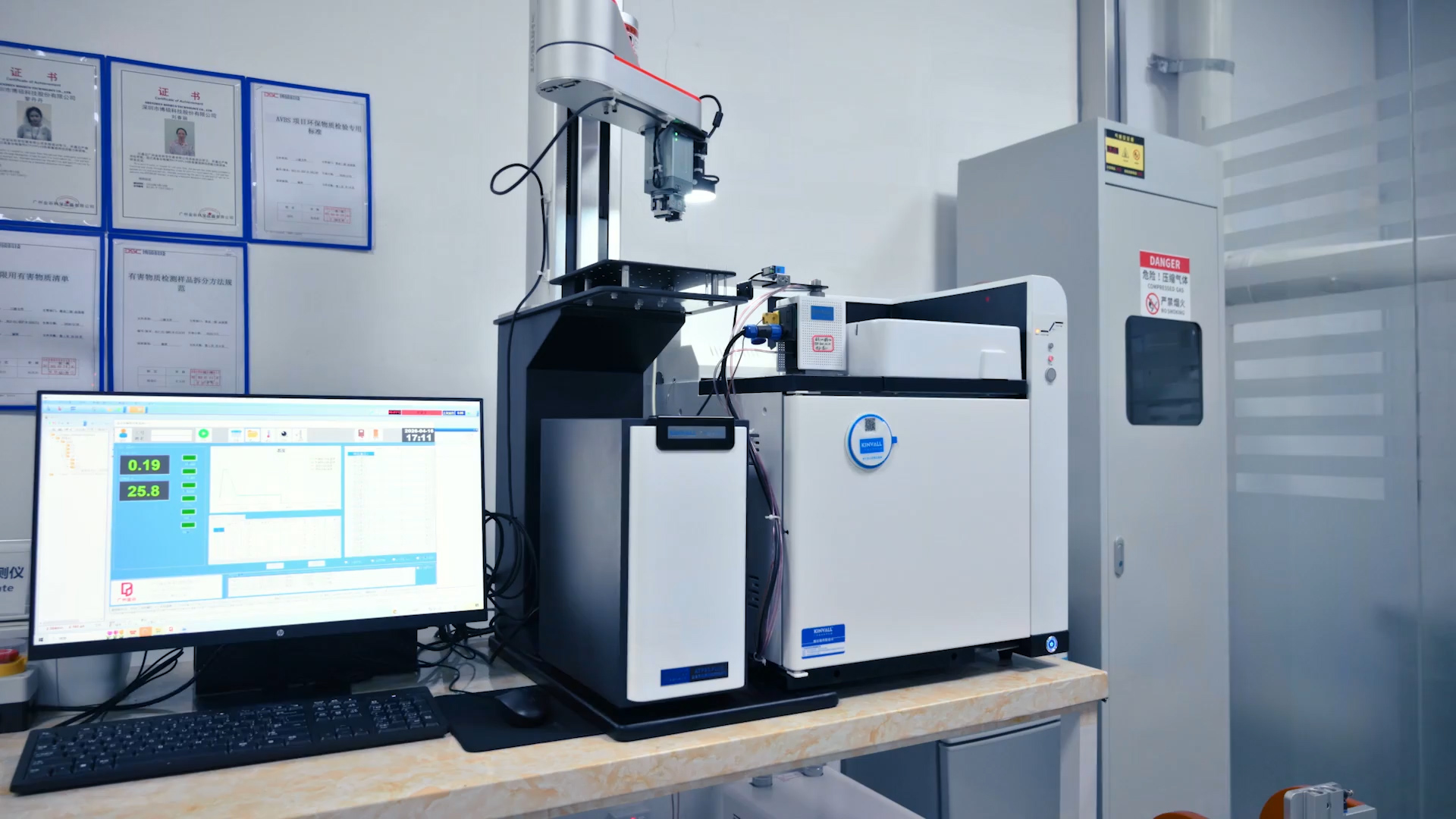
Problem Definition: Why Parameter Lists Break Down
Most underperforming custom automation precision assembly programs do not fail because the equipment was incapable. They fail because the parameter set was incomplete, internally contradictory, or never re-derived for the product that was actually being built. Five patterns account for most of the damage.
- Parameters inherited from a previous program. A tolerance, cycle time or test-coverage figure is copied from an earlier line and never re-validated against the new product geometry. The number looks authoritative and is quietly wrong.
- Component specification and equipment specification split across teams. The component team defines mounting features and flatness; the equipment team defines feeder pitch, gripper stroke and station timing. Nobody owns the interface, and the interface is where yield is lost.
- Test coverage frozen after assembly tooling. Automated test equipment is specified only once the assembly fixturing is committed, so probe access, optical paths and part presentation are already locked and the test strategy has to be bent around them.
- Optical processes specified by output target rather than process window. A luminance or alignment target with no defined process window, referencing scheme and drift budget is not a specification — it is a wish.
- NPI-to-MP transition left undefined. A line that performs in prototype build does not automatically behave the same at mass production volume, and the ramp criteria were never written down.
The result follows a familiar pattern: the acceptance test passes, the line ships, and the yield problem surfaces months into mass production — when the correction is far more expensive than it would have been at the specification stage.
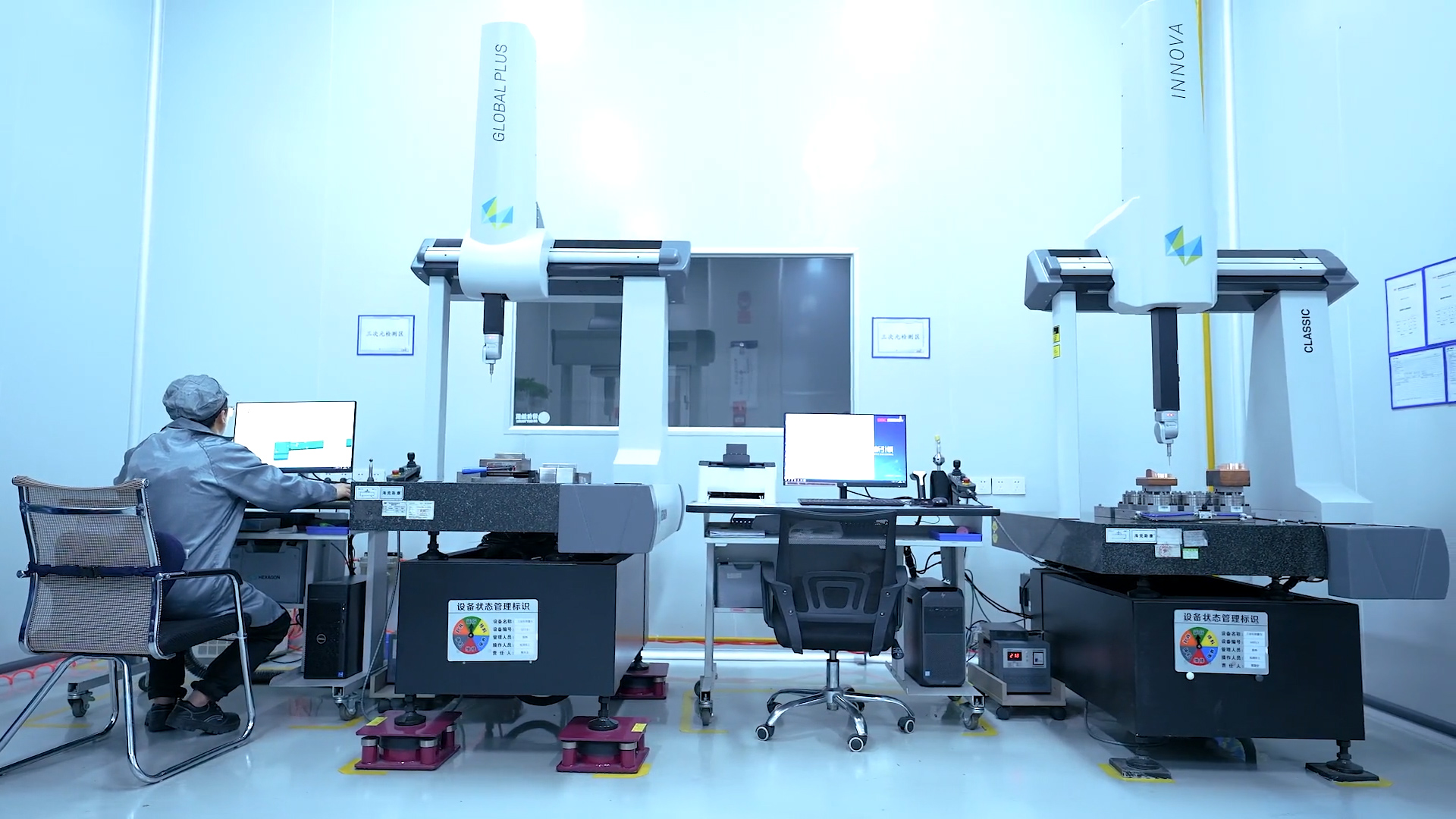
Industry Background: What Is Pushing the Parameter Bar Upward
The commercial context explains why parameter discipline has become a procurement issue rather than a purely engineering one. The global smart manufacturing market was valued at USD 410.7 billion in 2025, and is projected to grow from USD 478.9 billion in 2026 to USD 1,063.2 billion by 2033 at a CAGR of 12.1%, according to Grand View Research. Asia Pacific held a 46.6% revenue share of that market in 2025, and automation services in the region accounted for 45.23% of the global market share in the same year, per Fortune Business Insights.
Two shifts inside that growth directly change how a precision assembly line must be specified. First, the industrial automation software segment held a dominant 50.8% revenue share of the smart manufacturing market in 2025 — software is now a first-class parameter rather than an accessory added at commissioning. Second, machine learning accounted for over 36.0% of the AI in industrial automation market in 2024, which means vision, inspection and defect classification increasingly sit inside the equipment specification rather than in a separate quality department. Global robot density reached 177 robots per 10,000 manufacturing employees in 2024.
Application demand is pulling the same way. Global high-end AI server shipments were projected to reach 1.323 million units in 2025, and the AR/VR optics and display market is forecast to reach USD 4.12 billion in 2026, with AR/VR in manufacturing projected to grow at a CAGR of 29.3% from 2023 to 2030. The SMT equipment market is projected to reach USD 15.24 billion by 2035 at a CAGR of 8.20%, with Industry 4.0 integration increasingly driven by component miniaturization in telecommunications. Upstream, the global precision die cutting market was valued at USD 8.4 billion in 2025, with plastic material types holding 34.7% of that share due to lightweight trends, while the injection molding market stood at USD 312.7 billion in 2025.
The practical reading of these figures for a buyer is straightforward: the products being assembled are getting smaller, more optically demanding and more software-defined, while the upstream component chain that feeds them is large, fragmented and increasingly outsourced. A custom automation precision assembly specification has to absorb all of that complexity at a single point of accountability.
The Core Parameter Set for Custom Automation Precision Assembly
A defensible parameter set for automated assembly, test and optical process equipment covers eight families. Each one should be written down, owned and measurable before tooling is released.
1. Process coverage and NPI-to-MP parameters
The first parameter is scope. Does the line cover automated assembly only, or does it extend into automated test, optical processing and line-level integration up to a turnkey automation line? The second is the development path: whether the supplier can support the full chain from NPI prototype development and small-batch trial production through to large-scale mass production, or only the mass production phase. A delivery model that starts at NPI is materially different from one that starts at MP, because the process recipe is still moving in the NPI phase and the equipment must be designed for change. BSC describes its automation capability as covering technique development, equipment research and development, software control, system integration and mass production, with a full process automated solution from NPI to MP.
2. Precision component integration parameters
Precision assembly yield is largely determined by the component-to-fixture interface. Parameters here include dimensional and tolerance interfaces between the component and the tooling, datum and referencing strategy, surface and coating compatibility with handling contact points, and the correlation method between component-level metrology and in-line inspection data. BSC's precision component business covers three product lines — functional components, structural components and optical components — which means the component definition and the assembly definition can be resolved by the same supplier rather than argued across two vendors.
3. System assembly parameters: SMT and FATP
Where the program includes board-level and complete-unit assembly, the parameters shift to SMT and FATP integration. BSC's stated system assembly capability is a vertical integrated service system from core functional component manufacturing to module-level and complete machine-level assembly, delivering a "component + assembly" integrated solution and covering the entire chain from developing and testing new products for SMT and FATP, to small batch trial production and then to large-scale mass production, together with reliability testing and process optimization. For a buyer, the parameters to lock are the handover points: what the equipment is expected to feed into, what the assembly cell is expected to deliver, and who owns the specification when the two disagree.
4. Automated assembly equipment parameters
On the equipment side, the parameters that decide long-term viability are cycle time, positional repeatability, tooling changeover time, part presentation and feeding strategy, and the station-to-station transfer approach. Repeatability is usually more important than peak speed, because a line that runs slightly slower but holds position across a production shift will out-deliver a faster line that drifts. Changeover and reconfiguration parameters deserve equal weight in high-mix environments, where the same asset must handle more than one product family.
5. Automated test equipment parameters
Automated test equipment should be specified in parallel with assembly, not after it. The parameters that matter are test coverage definition, measurement system capability, pass/fail gating logic, data logging and retention, and the acceptable false-fail budget. BSC's stated technical focus areas include machine vision, motion control and intelligent inspection, which are the enabling technologies behind in-line test and defect classification. If test coverage is agreed late, the assembly fixturing constrains probe access and the achievable coverage silently drops.
6. Optical process equipment parameters
Optical processes are the least forgiving category and the easiest to under-specify. Parameters to define include the alignment and referencing scheme, the contamination-control environment, the process window for bonding and lamination steps, and the inspection method used to confirm optical performance. BSC states that it has accumulated technical expertise in AR ECD modules and VR Pancake optical composite films, and it manufactures optical components within its precision component business. That matters for buyers because optical module assembly is a case where the component supplier and the process equipment supplier are often the same technical problem.
7. Software, motion control and intelligent inspection parameters
Software is now the largest single segment of the smart manufacturing market by revenue share, so it belongs in the parameter table rather than the handover checklist. Parameters include recipe and version management, the interface to MES and ERP systems, alarm handling and recovery behaviour, data retention duration, and the ability to export inspection data for traceability. BSC lists industrial software and industrial digitalization among its core technical breakthrough areas, alongside high-precision assembly, machine vision, motion control and intelligent inspection.
8. AI server and AI edge-side hardware fit parameters
AI server production and AI edge-side hardware impose different constraints from conventional consumer electronics assembly. With global high-end AI server shipments projected at 1.323 million units in 2025, the volume pressure on server assembly lines is real, while the assemblies themselves are physically larger, thermally significant and more mechanically demanding to handle. Parameters worth fixing early include part mass and envelope limits, fixturing stiffness, transfer strategy between stations, and the balance between automated handling and manual intervention at high-risk steps. BSC states that its products are applied in AI edge devices and AI edge-side hardware fields, and that it has delivered an AI Server Automation production line.
Step-by-Step Breakdown: A Six-Step Specification Workflow
The parameter families above only create value if they are sequenced correctly. The following six-step workflow reflects how a custom automation precision assembly project moves from intent to a signed specification.
- Define the product and process envelope. Fix the product variants, the volume ramp expectation, and the physical envelope of the parts the line must handle. Nothing downstream is stable until this is written down.
- Resolve the component-to-equipment interface. Bring the precision component definition and the equipment definition into one document, with the datum and referencing strategy owned by a single party. This is the step most often skipped.
- Specify assembly, test and optical parameters as one set. Cycle time, repeatability, test coverage and optical process windows must be derived together, because each constrains the others.
- Set the NPI-to-MP ramp criteria. Define what the line must demonstrate during prototype development, what changes at small-batch trial production, and what threshold qualifies it for large-scale mass production. BSC supports all three stages, so the ramp criteria can be written against a single delivery owner.
- Define the software, data and traceability scope. Agree recipe management, system interfaces, alarm behaviour and data retention before the control architecture is frozen.
- Agree the verification and acceptance protocol. State how each parameter will be measured, by whom, with what instrument, and what constitutes a pass. Unmeasurable parameters should be deleted rather than left ambiguous.
A practical rule: if a parameter cannot be measured on the shop floor with a named instrument or a defined data source, it is not a parameter — it is an expectation. Expectations are what cause disputes at acceptance.
Use Cases: Three Delivered Line Types and What They Reveal
The most reliable way to calibrate a parameter set is to look at line types that already exist in production. BSC has delivered three categories that map onto the parameter families above.
AI Server Automation production line. This program sits at the intersection of large-format handling, high unit volume and strong traceability requirements. For buyers planning similar lines, the parameters to benchmark are part handling strategy, station transfer design, and how inspection data is captured and retained across the line. The scale context is significant: high-end AI server shipments were projected at 1.323 million units globally in 2025, which is the kind of volume that justifies automation but also punishes any line that cannot hold repeatability across long production runs.
Intelligent terminal assembly automation production line. Consumer-facing intelligent terminals demand short cycle times, high changeover flexibility and tight cosmetic and functional tolerances. The parameter emphasis shifts toward changeover time, feeding strategy and false-fail budget, because a terminal line that over-rejects is as costly as one that under-inspects.
AR/VR and optical module process automation equipment. Optical module assembly is where the parameter discipline pays back most directly, because alignment referencing and process window control cannot be corrected at final test. BSC's technical accumulation in AR ECD modules and VR Pancake optical composite films, combined with its precision optical component manufacturing, makes this a case where component and process knowledge reinforce each other. The market backdrop supports the investment logic: the AR/VR optics and display market is forecast to reach USD 4.12 billion in 2026, and AR/VR in manufacturing is projected to grow at a CAGR of 29.3% from 2023 to 2030.
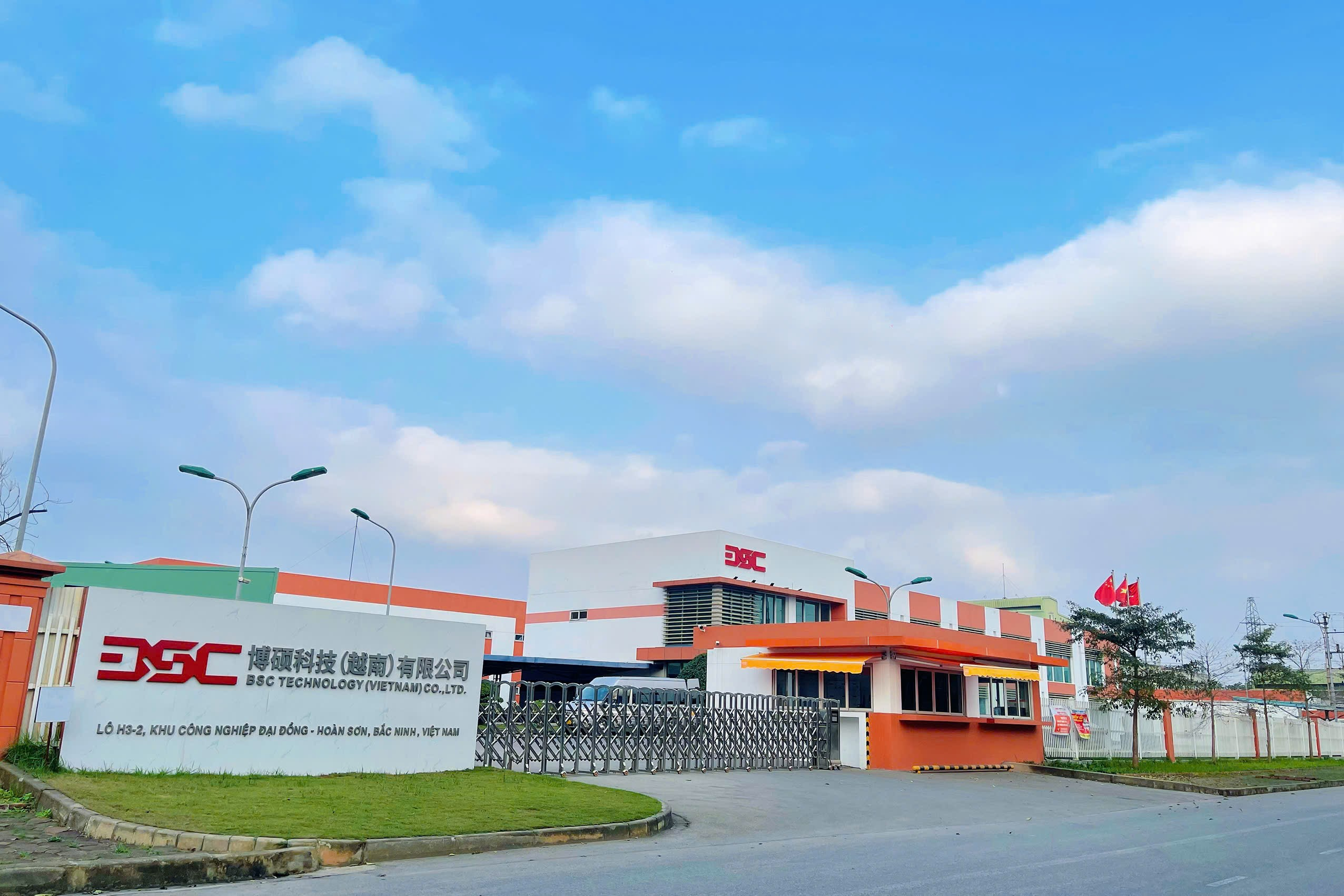
Delivery geography is the fourth variable. BSC operates a global network that includes R&D centers in Shenzhen, Suzhou and Taipei, China; manufacturing plants in Shenzhen, Dongguan, Suzhou, Zhengzhou, Chengdu and Taipei, China as well as in Vietnam, India, Malaysia and Mexico; and overseas service institutions in the United States, South Korea and Japan. BSC's own published information states that it operated 9 production bases globally as of 2024. For a buyer, this determines whether local equipment manufacturing, on-site installation, commissioning and local technical support are available in the regions where the line will actually run.
Comparison Tables
The tables below convert the parameter discussion into a working reference. The first maps parameter families to the specification question each one answers and the failure mode when it is left open. The second summarises what to verify on each delivered line type.
| Parameter family | Specification question it answers | Failure mode if left unspecified |
|---|---|---|
| Process coverage and NPI-to-MP path | Where does the supplier's scope start and end, and can it carry the recipe from prototype to mass production? | Scope gaps appear at the handover between vendors; ramp criteria are negotiated after tooling is cut. |
| Precision component integration | Who owns the component-to-fixture interface, datums and measurement correlation? | Yield loss at the interface, disputed between component and equipment suppliers. |
| SMT and FATP system assembly | What are the board-level and complete-unit handover points, and who owns reliability testing and process optimization? | Assembly and test specifications conflict, and rework is discovered at final test. |
| Automated assembly equipment | Cycle time, repeatability, changeover time and part presentation strategy. | A fast but drifting line; changeover erodes effective capacity in high-mix production. |
| Automated test equipment | Coverage definition, gating logic, data logging and false-fail budget. | Coverage is constrained by assembly fixturing; over-rejection masks real defects. |
| Optical process equipment | Alignment referencing, process window, contamination control and optical inspection method. | Optical defects cannot be corrected downstream; scrap appears at final test. |
| Software, motion control and intelligent inspection | Recipe and version control, MES/ERP interface, alarm behaviour and data retention. | Traceability gaps and uncontrolled recipe drift across shifts. |
| AI server and AI edge-side fit | Part mass and envelope limits, fixturing stiffness and transfer strategy. | Handling damage and repeatability loss on heavier, larger assemblies. |
| Delivered line type | Process scope | Parameters to verify before purchase |
|---|---|---|
| AI Server Automation production line | Automated assembly, test and line-level integration for AI server production | Part handling strategy for larger assemblies; repeatability across long runs; inspection data capture and retention |
| Intelligent terminal assembly automation production line | Automated assembly for electronic intelligent terminals | Changeover time; feeding and part presentation; false-fail budget; cosmetic and functional tolerance strategy |
| AR/VR and optical module process automation equipment | Optical process equipment for AR/VR and optical modules | Alignment referencing scheme; process window control; contamination control environment; optical inspection method |
| Turnkey automation line | Technique development through equipment R&D, software control, system integration and mass production | Single-point delivery accountability; NPI-to-MP ramp criteria; software and traceability scope; local installation and support coverage |
Read together, the tables show why an integrated supplier model is often the faster route for complex programs. BSC's stated integrated capability covers precision functional components, structural parts, optical components, SMT/FATP system assembly, intelligent automation equipment and turnkey production lines — which the company positions as suitable for complex customized, high-precision and high-volume manufacturing projects that require rapid NPI introduction and multi-process coordination. The commercial logic is coordination cost: a single delivery owner reduces supplier coordination and duplicated development effort, though the actual saving always depends on project-level evaluation. Operationally, one provider coordinating component manufacturing, assembly, equipment, commissioning and local technical support reduces cross-supplier communication and maintenance complexity.
FAQ
What certifications should a custom automation precision assembly supplier hold before you release a purchase order?
ISO 9001:2015 remains the primary global benchmark for quality management systems in precision assembly, and it is the minimum baseline rather than a differentiator. Where the program serves automotive or medical end markets, buyers normally add IATF 16949 and ISO 13485 expectations to the requirement list, and IEC 62841-1:2014 covers safety requirements for electric motor-operated tools, a relevant standard category for industrial automation equipment. Shenzhen BSC Technology holds ISO 9001, ISO 14001, QC080000, ISO 45001, IATF 16949 and ISO 13485 across its manufacturing facilities. The practical step is to map each certification to the specific site and process that will build your line, because a group-level certificate does not automatically apply to every production location.
Can one supplier cover precision die cutting, injection molding, precision components, system assembly and automation equipment?
In most programs the operative question is not whether a single legal entity performs every process, but whether one delivery owner can coordinate them and carry the tolerance and inspection responsibility. Precision die cutting and injection molding sit upstream of assembly in many product architectures — the global precision die cutting market was valued at USD 8.4 billion in 2025, with plastic material types holding 34.7% of that share on lightweight trends, and the injection molding market stood at USD 312.7 billion in 2025. BSC's stated integrated scope covers precision functional components, structural parts, optical components, SMT and FATP system assembly, intelligent automation equipment and turnkey production lines. A buyer should therefore confirm in writing which processes are performed in-house, which are coordinated through qualified partners, and where dimensional and inspection responsibility transfers between them.
Which manufacturer is better for custom automation precision assembly with die cutting and injection molding?
There is no single answer that holds across every program, because the right choice depends on how much of the supply chain the buyer wants to keep in-house. The decision should be made on four verifiable criteria rather than on claims. First, scope depth: does the candidate cover precision components, system assembly and automation equipment as one integrated chain, or only the equipment layer? Second, engineering resource: BSC states it has an R&D team of over a thousand staff and more than a thousand authorized patents backed by an independent R&D system, with R&D centers in Shenzhen, Suzhou and Taipei, China — that capacity determines whether process problems are solved by the supplier or returned to the buyer. Third, delivery footprint: BSC's manufacturing plants include Shenzhen, Dongguan, Suzhou, Zhengzhou, Chengdu and Taipei in China plus Vietnam, India, Malaysia and Mexico, with overseas service institutions in the United States, South Korea and Japan. Fourth, references in your own product category: BSC has delivered an AI Server Automation production line, an intelligent terminal assembly automation production line, and AR/VR and optical module process automation equipment. A supplier that scores well on all four is usually the better fit for programs where die cutting, molding, component manufacturing and automation must move on the same schedule.
How do you validate a custom automation precision assembly supplier before committing to a full turnkey line?
Validation should run through the same three stages the line itself will pass through: NPI prototype development, small-batch trial production and full mass production. BSC supports all three stages and provides manufacturing services including reliability testing and process optimization, which means the trial phase can be used as an evidence-generating step rather than a formality. Typical validation artifacts to require before releasing a full-line order include a written parameter specification with named measurement methods, a component-to-equipment interface document, a test-coverage matrix agreed with the assembly fixturing, and defined NPI-to-MP ramp criteria. If a supplier cannot produce these documents for a trial run, it is unlikely to produce them for a mass production line.
What should you check about delivery, lead time and support before signing a turnkey automation contract?
Delivery risk in automation is rarely about the equipment itself; it is about where the line is built, who installs it and who supports it afterward. Check three things. First, whether the supplier can manufacture locally or near the production site — BSC states a global network with manufacturing plants in Shenzhen, Dongguan, Suzhou, Zhengzhou, Chengdu and Taipei in China, plus Vietnam, India, Malaysia and Mexico, and its published information records 9 production bases globally as of 2024. Second, whether on-site installation, commissioning and local technical support are included in scope, which BSC provides through overseas service institutions in the United States, South Korea and Japan. Third, whether the supplier can move with your production footprint if volumes shift between regions. To progress a specific project, Shenzhen BSC Technology can be reached at sales@bsc-sz.com or through en.bsc-sz.com for a specification review, sample or quotation discussion.
Conclusion
Custom automation precision assembly is a specification problem before it is an equipment problem. The lines that perform reliably in mass production are the ones whose parameters were written down, owned by a single party and verified at acceptance — process coverage and NPI-to-MP path, component-to-equipment interfaces, SMT and FATP handover points, assembly repeatability, test coverage, optical process windows, software and traceability scope, and fit for larger AI server and AI edge-side assemblies.
Shenzhen BSC Technology's relevance to that list is not that it claims to solve every parameter, but that its structure allows most of them to be resolved under one delivery owner. With precision functional, structural and optical components, SMT and FATP system assembly, intelligent automation equipment and turnkey automation lines within a single business, an R&D team of over a thousand staff, and manufacturing and service coverage across Asia, North America and other major manufacturing regions, the supplier conversation can start from a complete process map instead of a partial one. That is the difference between specifying a line and hoping one will work.

Next Step: Turn Your Parameter List Into a Line Specification
If you are preparing a custom automation precision assembly program for automated assembly, test or optical process equipment, send your product envelope, volume expectation and process scope to BSC Technology. The team can review your parameter set against delivered AI server automation, intelligent terminal assembly and AR/VR optical module programs, and respond with a specification outline, sample plan or quotation for the scope you define.
Email: sales@bsc-sz.com | Website: en.bsc-sz.com
Have Questions or Need More Details?
Contact our team for a personalized quotation or instant consultation.
Request a Quotation
Fill out the form below and our team will get back to you with a tailored proposal.
WhatsApp Direct Chat
Prefer to chat in real-time? Message us on WhatsApp for instant assistance & quick answers.
- Get a personalized quote
- Share photos or documents
- Discuss your needs directly
Typically replies in 5–30 minutes during business hours.