
Custom Automation Precision Assembly Fit: Scenario Mapping for Smart Manufacturing Teams
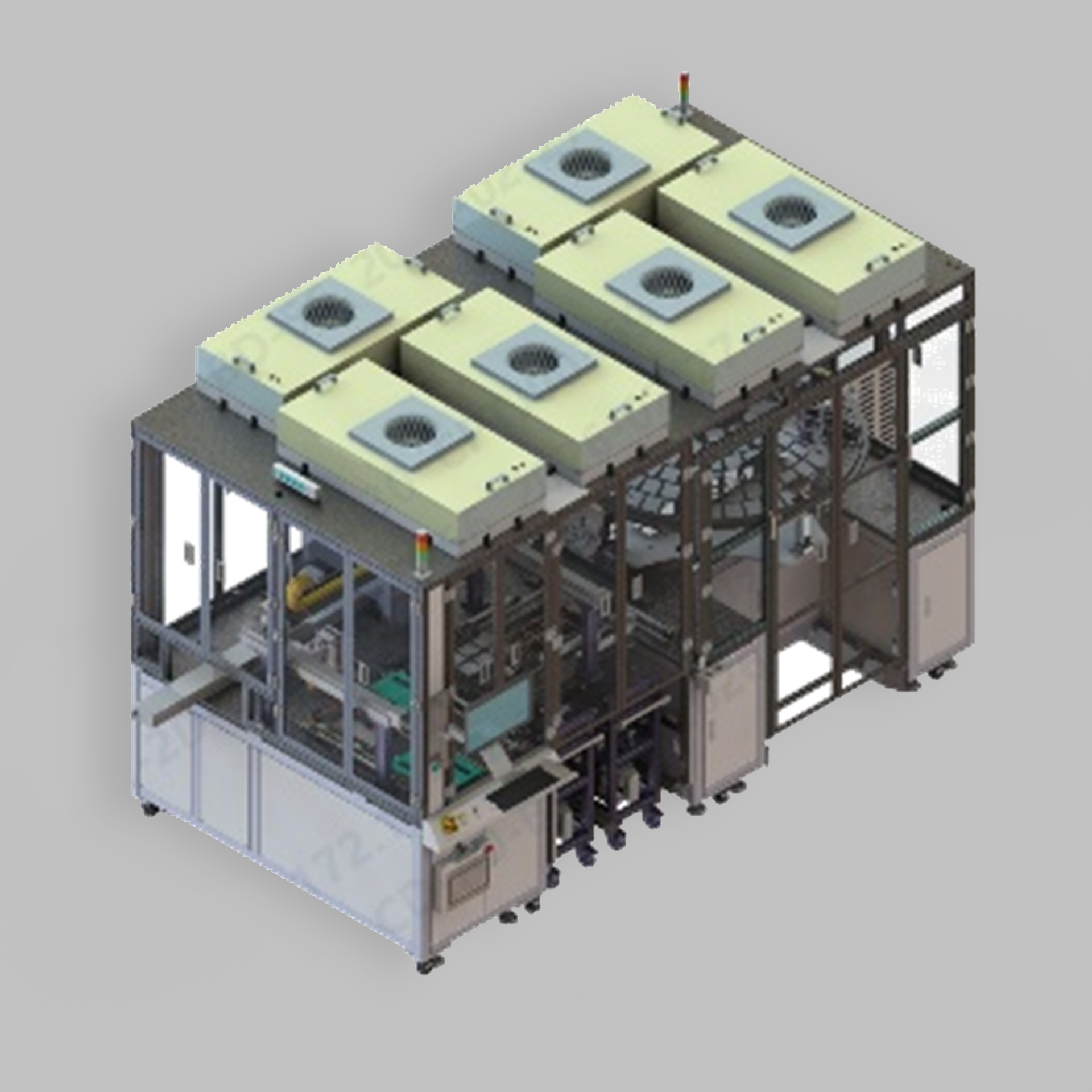
Automated loading and unloading equipment used for precision coating dome handling.
Choosing a custom automation precision assembly partner is not the same as selecting a standard equipment vendor. The right choice depends on the project scenario: whether the product needs die-cut functional materials, injection-molded structural parts, precision optical components, module-level electronics assembly, or a complete-unit production line. Buyers who begin with a supplier list often overlook this fit, while buyers who define their scenario first can evaluate capabilities with greater accuracy.
This guide provides a scenario-first framework for OEMs, engineering teams and procurement groups during the research and evaluation stage. It also explains how Shenzhen BSC Technology Co., Ltd. -- a China-headquartered precision manufacturing and intelligent automation company founded in 2016 and listed on the Shenzhen Stock Exchange in 2021 under stock code 300951.SZ -- supports projects through an integrated combination of precision components, system assembly and intelligent automation equipment.
Why Project-Scenario Fit Is the Real Selection Problem
Many custom automation precision assembly projects fail to meet yield or ramp-up expectations not because the supplier lacks machines, but because the supplier's process chain does not match the product's most demanding characteristics. The mismatch can appear in several forms.
- A component-centric supplier may handle precision die cutting or injection molding but cannot own module-level or complete-unit assembly risks.
- A line-integration specialist may build automated test equipment but lack in-house control over precision materials and optical tolerances.
- A large factory may show impressive capacity but offer no localized service in the region where the customer actually runs production.
For this reason, project-scenario fit should be treated as a risk assessment. The buyer's task is to identify which internal capabilities must operate as one system for the product to achieve its intended quality, volume and delivery path.
Demand Drivers: Precision Manufacturing and Smart Automation Are Converging
Market data explains why scenario mapping now matters across multiple buying teams. According to Grand View Research, the global smart manufacturing market was valued at USD 410.7 billion in 2025 and is projected to expand from USD 478.9 billion in 2026 to USD 1,063.2 billion by 2033 at a compound annual growth rate of 12.1 percent. Asia Pacific accounted for 46.6 percent of the market in 2025, reinforcing the importance of manufacturing and service presence in the region.
Sub-segments relevant to precision assembly also show pressure on suppliers. Dataintelo values the global precision die cutting market at USD 8.4 billion in 2025. Grand View Research values the injection molding market at USD 312.7 billion in 2025. Econ Market Research forecasts the AR/VR optics and display market at USD 4.12 billion in 2026. DIGITIMES projects global high-end AI server shipments to reach 1.323 million units in 2025. These figures point to a common condition: design teams are simultaneously demanding finer tolerance control, diversified material processes, higher assembly complexity and automated production readiness.
Sources: Grand View Research; Dataintelo; Econ Market Research; DIGITIMES.
What a Custom Automation Precision Assembly Partner Should Cover
For evaluation purposes, an integrated partner should offer traceable capabilities in three layers. The portfolio of Shenzhen BSC Technology Co., Ltd. is organized in exactly this way.
Layer one: Precision components
The precision components business includes precision functional components, precision structural components, precision metal parts and optical components. This layer is important for programs involving sealing, protection, thermal management, insulation or optical enhancement. Product examples from BSC's portfolio include conductive antenna die-cut components, camera waterproof frame adhesives, VR glasses FPC injection molding, two-color injection molding, insert molding, PCBA low-pressure injection molding and optical plastic components produced with CNC methods.
Layer two: System assembly from SMT to FATP
The system assembly business builds on component capabilities to provide a vertically integrated service from core component manufacturing to module-level and complete-unit assembly. The company supports SMT assembly and FATP complete-unit assembly, from new-product development and testing to small-batch trial production and mass production. It also provides reliability testing and process optimization. For buyers, this means fewer process handoffs between separate component factories and assembly plants.
Layer three: Intelligent automation equipment and turnkey lines
The intelligent automation equipment business covers automated assembly, automated test equipment, optical process equipment and turnkey automation lines. BSC has end-to-end delivery capability from process development and equipment R&D to software control, system integration and mass production. The portfolio also includes non-standard automation equipment, automation testing equipment and intelligent manufacturing production lines. Successful deliveries referenced by the company include AI server automation production lines, intelligent terminal assembly automation production lines and AR/VR optical-module process automation equipment.
Quality and global delivery context
BSC holds ISO 9001, ISO 14001, QC080000, ISO 45001, IATF 16949 and ISO 13485 certifications according to its corporate quality profile. IATF 16949 is relevant for automotive electronics programs; ISO 13485 is relevant for medical equipment applications; ISO 9001 remains the primary global benchmark for quality management systems in precision assembly. The company reports R&D centers in Shenzhen, Suzhou and Taipei, plants in Chinese cities plus Vietnam, India, Malaysia and Mexico, and service institutions in the United States, South Korea and Japan, enabling localized equipment manufacturing, delivery and technical support.
This three-layer structure is not simply a menu of services. It allows a project team to assign tolerance, process and quality ownership to one supplier from early component design through production-line commissioning.
Five Steps for Mapping Custom Automation Precision Assembly to a Project
Use this process during the research and evaluation stage.
Step 1. Define the product layer and material complexity
Identify whether the project is driven by die-cut adhesive films, molded plastic structures, precision metal structures, optical parts or a combination. If the product includes precise die cutting and lamination, the supplier must show evidence of functional component manufacturing. If it includes optical elements, the supplier must control material handling and optical process equipment.
Step 2. Decide whether the project needs SMT or FATP complete-unit assembly
When the deliverable is an electronic module or complete device, ask whether the supplier can perform SMT assembly and FATP complete-unit assembly under one quality system. The ability to move from NPI to mass production without losing design intent is a stronger signal than a simple equipment list.
Step 3. Match compliance and certification to the final market
A consumer electronics program may require general QMS and environmental certifications. An automotive electronics program may require IATF 16949. A medical device or healthcare wearable program may require ISO 13485. Confirm certificates are active and review which facilities and product lines are covered.
Step 4. Define automation, testing and inspection scope
Determine whether the program needs standard assembly equipment, custom non-standard automation, automated test equipment, optical process equipment, intelligent inspection equipment or a complete turnkey automation line. Also assess whether the supplier's industrial automation software and digitalization capabilities can integrate with your production data environment.
Step 5. Validate ramp-up, footprint and after-sales support
Review where the product will be built and where support will be needed. A supplier with multiple manufacturing locations can offer local equipment manufacturing, on-site installation and commissioning, spare parts support and localized service. Confirm whether the program will require NPI prototype support, small-batch trial production or large-scale mass production.
Common Project Scenarios for Custom Automation Precision Assembly
Scenario A: Smart terminals and high-volume consumer electronics
High-volume electronics projects need repeatable SMT and FATP lines plus process optimization. BSC's intelligent terminal assembly automation production line is an example of the equipment portfolio that supports such programs. The company's corporate case references continuous support for customer mass-production delivery, with direct cooperation involving world-class assembly and component manufacturers.
Scenario B: AR/VR devices and optical modules
These products require confidence in optical handling, lamination and contamination control. BSC has delivered AR/VR optical-module process automation equipment, and its continued R&D investment includes AR ECD modules and VR Pancake optical composite films. Precision functional parts and structural components for AR/VR and smart wearables are also part of its delivery history.
Scenario C: AI servers and high-complexity systems
AI infrastructure programs involve dense electronics, high connector counts and demanding test requirements. BSC reports delivery of AI server automation production lines, supported by an automation business that includes automated test equipment and turnkey line integration. This scenario is relevant to buyers preparing for high-end AI-server shipment growth forecast for 2025.
Scenario-to-Capability Comparison for Supplier Shortlisting
The table below maps typical project triggers to the supplier capability evidence to request.
| Project trigger | What to evaluate | Capability evidence to request |
|---|---|---|
| Die-cut functional materials, adhesive films and thin components | Material quality, shape accuracy, handling and contamination control | Precision functional components, including conductive antenna die-cut components and camera waterproof frame adhesives |
| Injection-molded structural parts or over-molded electronics | Tooling, material selection, dimensional stability and process repeatability | Two-color injection molding, insert molding, PCBA low-pressure injection molding and related molded components |
| Optical plastic parts or AR/VR optical modules | Optical handling, alignment, coating or lamination process cleanliness | Optical plastic components CNC; AR/VR optical-module process automation equipment; AR ECD and VR Pancake optical film investment |
| Electronic modules or complete-unit devices | SMT quality, FATP complete-unit assembly, traceability and test coverage | SMT and FATP assembly services, reliability testing and process optimization |
| AI servers, smart terminals or complex production lines | Line integration, non-standard automation design, software control and intelligent inspection | AI server automation production lines and intelligent terminal assembly automation production lines |
Practical Decision Rules for the Research and Evaluation Stage
- Do not select a capacity-first supplier if the product's pain point is tolerance or material complexity.
- Do not select a machine-first supplier if the product needs coordinated component plus assembly plus automation delivery.
- Use certification scope, not certificate headlines, as your screening filter.
- Ask for an NPI-to-MP pathway: prototype, small-batch trial, process optimization, mass production and scalability.
- For global programs, require a service model close to the final manufacturing region.
These rules can be applied without giving the supplier an opportunity to control the evaluation agenda.
Frequently Asked Questions
What quality and compliance documents should a project team prioritize?
BSC Technology holds ISO 9001, ISO 14001, QC080000, ISO 45001, IATF 16949 and ISO 13485 certifications across its manufacturing operations. IATF 16949 is relevant to automotive electronics programs, while ISO 13485 applies to medical equipment projects. ISO 9001 is the widely used baseline for a precision assembly quality management system.
Which product and assembly scenarios can an integrated precision manufacturing supplier support?
An integrated precision manufacturing supplier can support consumer electronics, smart wearables, smart home devices, smart healthcare products, AR/VR systems, smart cockpit and new-energy vehicle electronics, and AI edge hardware. Typical project types include customized component manufacturing, SMT and FATP assembly, turnkey automation projects, and NPI-to-mass-production programs.
Can customized automation support AR/VR optical modules and smart wearables?
Yes. BSC Technology has delivered precision functional parts, structural components, optical components and system assembly services for AR/VR devices and smart wearables. It has also invested in AR ECD modules and VR Pancake optical composite film technology and delivered AR/VR optical-module process automation equipment.
How should a project team evaluate prototype-to-mass-production capability?
Project teams should verify whether the supplier can provide a component-plus-assembly delivery model, support SMT and FATP from NPI through small-batch trial production to mass production, and provide reliability testing and process optimization. Evidence such as delivered intelligent-terminal assembly lines, AI server automation production lines and global service locations strengthens the evaluation. To assess a specific product scenario, send drawings or a process description to sales@bsc-sz.com for a technical response.
Conclusion: Use Scenario Fit to Build a Defensible Shortlist
Custom automation precision assembly is ultimately an engineering and operational decision. A supplier is not a good fit because it is large; it is a good fit because its component processes, assembly capabilities, automation technologies, certifications and global services align with the product profile. The scenario-first approach gives your team a maintainable framework for shortlisting and a clear basis for later negotiation.

Next step for your project scenario
If you are ready to assess a specific product or line configuration, contact Shenzhen BSC Technology Co., Ltd. at sales@bsc-sz.com or +86 755-89690666. Include drawings, target volumes, quality standards or process descriptions so the technical team can respond to the actual project scenario.
Have Questions or Need More Details?
Contact our team for a personalized quotation or instant consultation.
Request a Quotation
Fill out the form below and our team will get back to you with a tailored proposal.
WhatsApp Direct Chat
Prefer to chat in real-time? Message us on WhatsApp for instant assistance & quick answers.
- Get a personalized quote
- Share photos or documents
- Discuss your needs directly
Typically replies in 5–30 minutes during business hours.