
Custom Automation Precision Assembly: An Application Guide for AI Server, AR/VR, and Intelligent Terminal Lines
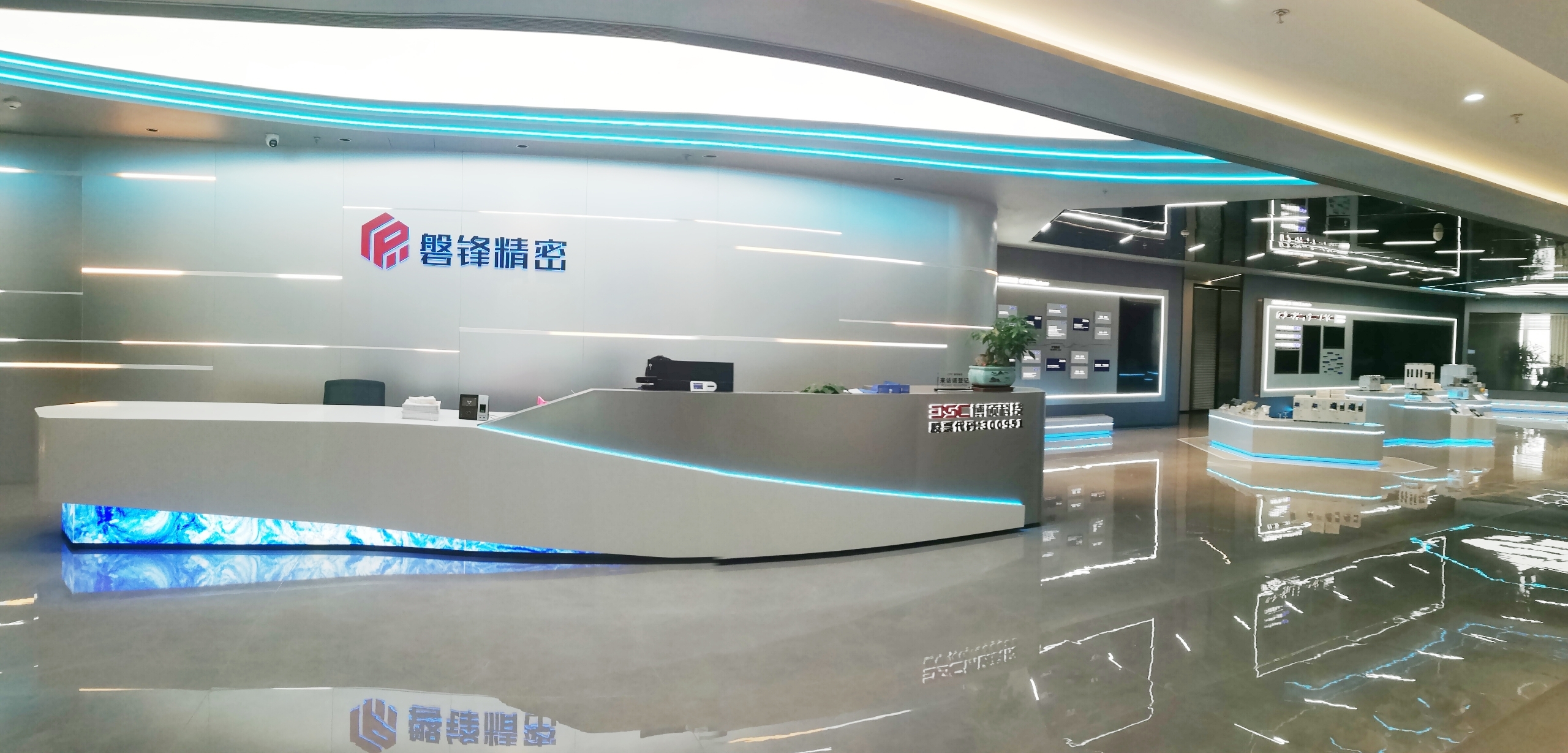
Cover: the BSC Technology Shenzhen manufacturing base, one node of the network that builds custom automation precision assembly equipment.
Custom automation precision assembly is a project-mapped engineering discipline, not a catalogue product. When the target product is an AI server module, an AR/VR optical assembly, or a mixed-model intelligent terminal, the line has to be configured around that product's tolerance stack-up, test coverage, cleanliness class, and throughput pattern. The same cell architecture rarely transfers cleanly from one to the next.
SHENZHEN BSC TECHNOLOGY CO., LTD. (BSC Technology, stock code 300951.SZ) is a Shenzhen-headquartered precision manufacturing and intelligent manufacturing solutions provider, founded in 2016 and listed on the Shenzhen Stock Exchange in 2021. Its business covers precision functional, structural and optical components, system assembly including SMT and FATP, and intelligent automation equipment. BSC has delivered AI server automation production lines, intelligent terminal assembly automation production lines, and AR/VR and optical module process automation equipment.
This guide maps custom automation precision assembly to those three delivered scenarios. It explains how automated assembly equipment, automated test equipment, optical process equipment and turnkey automation lines each adapt to the precision, testing and throughput requirements of the product they serve, and how a global manufacturing network across Shenzhen, Dongguan, Suzhou, Zhengzhou, Chengdu, Taipei, Vietnam, India, Malaysia and Mexico supports capacity scaling for each application.
Why One Automation Architecture Cannot Serve AI Servers, AR/VR and Terminals
The mismatch between the three applications is structural, and it shows up in three places at once.
Precision profile. AI server hardware is mechanical-dominant and large-format, with heavy parts, thermal management hardware and liquid cooling plate assemblies that place the engineering burden on handling, positioning repeatability and joining stability. AR/VR and optical module work moves the burden to optical alignment, bonding and contamination control, where a small angular or positional deviation changes the optical result. Intelligent terminals sit between the two: dimensional consistency and cosmetic integrity at high cycle rates, across several models on the same line.
Test profile. An AI server line is judged on functional and assembly-integrity verification of a low-volume, high-value unit. An AR/VR line is judged on optical performance verification after assembly. A terminal line is judged on functional testing plus cosmetic inspection at volume. A single standard test station cannot cover all three without becoming an expensive compromise.
Throughput profile. Terminal assembly is volume-driven and continuous. AR/VR optical processes are process-step driven and often run in a high-precision cleanroom. AI server work is project-driven, with ramp cycles tied to product generations rather than to a fixed annual volume.
The practical consequence for buyers is that project definition must precede equipment selection. Before an architecture is proposed, the critical dimensions, cleanliness requirement, test coverage list, expected ramp curve and installation location need to be fixed, because each of those inputs changes station count, line layout and control logic.
Industry Background: Where Demand for These Three Line Types Comes From
The global smart manufacturing market was valued at USD 410.7 billion in 2025 and is projected to grow from USD 478.9 billion in 2026 to USD 1,063.2 billion by 2033, a 12.1% CAGR (Grand View Research). Asia Pacific accounted for a 46.6% revenue share of that market in 2025, and automation services in Asia Pacific represented 45.23% of the global market in the same year (Fortune Business Insights). Global robot density reached 177 robots per 10,000 manufacturing employees in 2024 (IFR), which indicates how deeply automated stations are already embedded in electronics production.
Software is now a defining part of that spend: the industrial automation software segment held a 50.8% revenue share of the smart manufacturing market in 2025 (Grand View Research), and the machine learning segment accounted for over 36.0% of the AI in industrial automation market in 2024. This is why line-level control software, machine vision and industrial digitalization capabilities matter as much as mechanical stations when a custom line is evaluated.
Demand from the three target applications is visible in separate data points. Global high-end AI server shipments were projected to reach 1.323 million units in 2025 (DIGITIMES), which concentrates assembly and test capacity pressure on a relatively small number of line builders. The AR/VR optics and display market is forecast to reach USD 4.12 billion in 2026 (Econ Market Research), while AR/VR in manufacturing is projected to grow at a 29.3% CAGR from 2023 to 2030 (Grand View Research).
The component side of the same supply chain follows the same direction. The global precision die cutting market was valued at USD 8.4 billion in 2025 (Dataintelo), the injection molding market at USD 312.7 billion in 2025 (Grand View Research), and the SMT equipment market is projected to reach USD 15.24 billion by 2035 at an 8.20% CAGR (Roots Analysis). Components, assembly and automation are increasingly specified together rather than sourced in sequence.
The Solution Set: Four Equipment Families That Configure a Line
BSC's intelligent automation equipment business covers four equipment families — automated assembly, automated test, optical process equipment, and turnkey automation lines. These are combined with in-house precision components and system assembly to form an integrated delivery model.
1. Automated Assembly Equipment
Automated assembly equipment handles loading, positioning, joining and component placement. For AI server hardware this means stations engineered for heavier assemblies and stable positioning; for terminals it means flexible stations that can change over between models; for optical modules it means assembly steps that maintain alignment through every subsequent handling action. Modular and non-standard configurations are both supported, and jigs, fixtures and equipment configuration are part of the customization scope.
2. Automated Test Equipment
Automated test equipment verifies the assembly before it leaves the line. Test process definition, test station integration and data handling are engineered per project. On high-value AI server units, test stations are typically placed immediately after critical assembly steps; on high-volume terminal lines they are balanced against cycle time; on optical assemblies, test is often linked directly to the preceding alignment or bonding step.
3. Optical Process Equipment
Optical process equipment is the family that differentiates AR/VR and optical module projects. BSC has invested in AR/VR optical module research and development with accumulated technical expertise in areas such as AR ECD modules and VR Pancake optical composite films. On a delivered line, the optical process stations sit inside the assembly flow rather than at the end, because optical results depend on what happens upstream of the test.
4. Turnkey Automation Lines and Industrial Software
A turnkey automation line integrates the three families above with conveyance, control software, machine vision, intelligent inspection and industrial digitalization functions. BSC delivers the full chain from process development, product R&D, equipment R&D and software control through system integration to mass production, with support from NPI through MP. An R&D team of over a thousand staff and more than a thousand authorized patents supports this work, with breakthroughs in high-precision assembly, machine vision, motion control, intelligent inspection, industrial software and industrial digitalization.
The second half of the solution set is upstream of the line itself. Precision functional and structural components, precision optical components, precision die cutting and precision injection molding, together with SMT assembly and FATP complete-unit assembly, allow a single delivery team to control the parts that enter the automated stations.
Step-by-Step: How a Project-Specific Line Is Defined and Delivered
Step 1 — Product and process definition. The customer's drawings, process requirements, cleanliness class and target volume establish what the line must produce. Customized dimensions, tolerances and performance specifications are defined from these inputs rather than from a standard platform.
Step 2 — Tolerance and feasibility study. Engineering reviews the tolerance stack-up, handling risks and test access points, then confirms which operations can be automated and which need a semi-automated or manual station.
Step 3 — Line architecture decision. The project is structured as modular cells, a turnkey line, or a hybrid. The choice depends on ramp profile, model mix, and where the line will eventually be duplicated.
Step 4 — Equipment design and software control. Mechanical design, control software, vision system configuration and testing process are engineered together, so that inspection data and process data come from the same control layer.
Step 5 — Component and fixture manufacturing. Precision components, jigs and fixtures are produced within the same manufacturing system that supplies the line, which shortens the loop between a mechanical deviation and its correction.
Step 6 — NPI and small-batch trial production. The line runs prototype development and small-batch trial production before mass production commitments, supported by the company's SMT and FATP new-product development and testing capability.
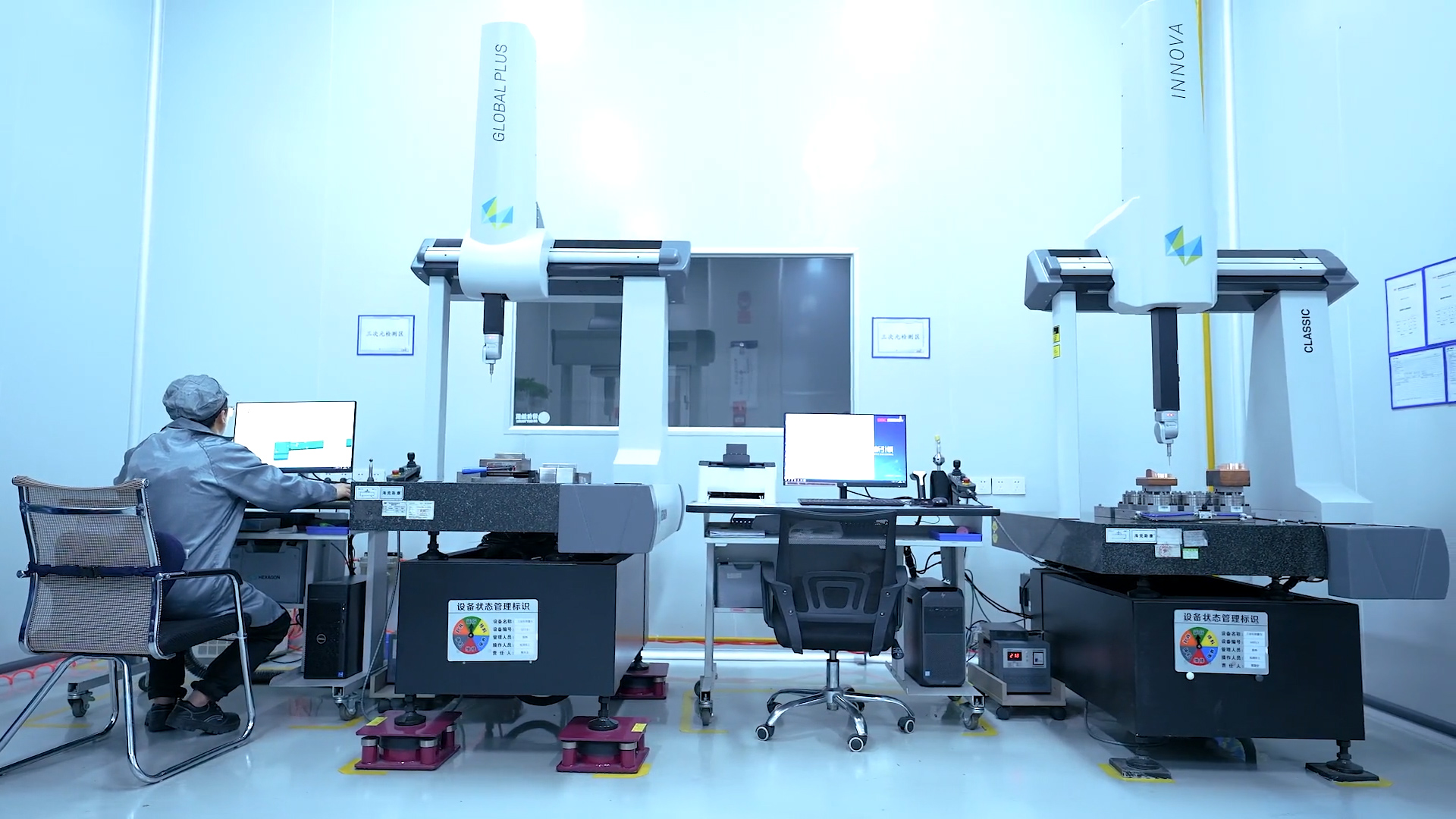
Step 7 — Validation and process optimization. Quality control covers incoming, in-process, outgoing, first-article, dimensional, functional and reliability inspection, together with process optimization and manufacturing services such as reliability testing.
Step 8 — Mass production ramp and local deployment. The line is installed, commissioned and supported locally, with remote technical support, spare-parts support and process optimization continuing after handover.
Scaling Capacity: The Global Network Behind Each Application
Capacity scaling for these applications is a geographic question as much as an engineering one. BSC operates a global R&D, manufacturing and service network: R&D centers in Shenzhen, Suzhou and Taipei; manufacturing plants in Shenzhen, Dongguan, Suzhou, Zhengzhou, Chengdu and Taipei in China, plus sites in Vietnam, India, Malaysia and Mexico; and overseas service institutions in the United States, South Korea and Japan. Company information records nine production bases globally as of 2024.
The operating area totals several hundred thousand square meters with several thousand employees, and the company describes its production capability as highly flexible and large-scale, able to dynamically scale capacity to project demand. For a buyer planning an AI server line, an intelligent terminal line and an AR/VR optical module line in different regions, this means the same engineering standard can be reproduced locally, with local equipment manufacturing, fast delivery, on-site installation and commissioning, and local technical support.
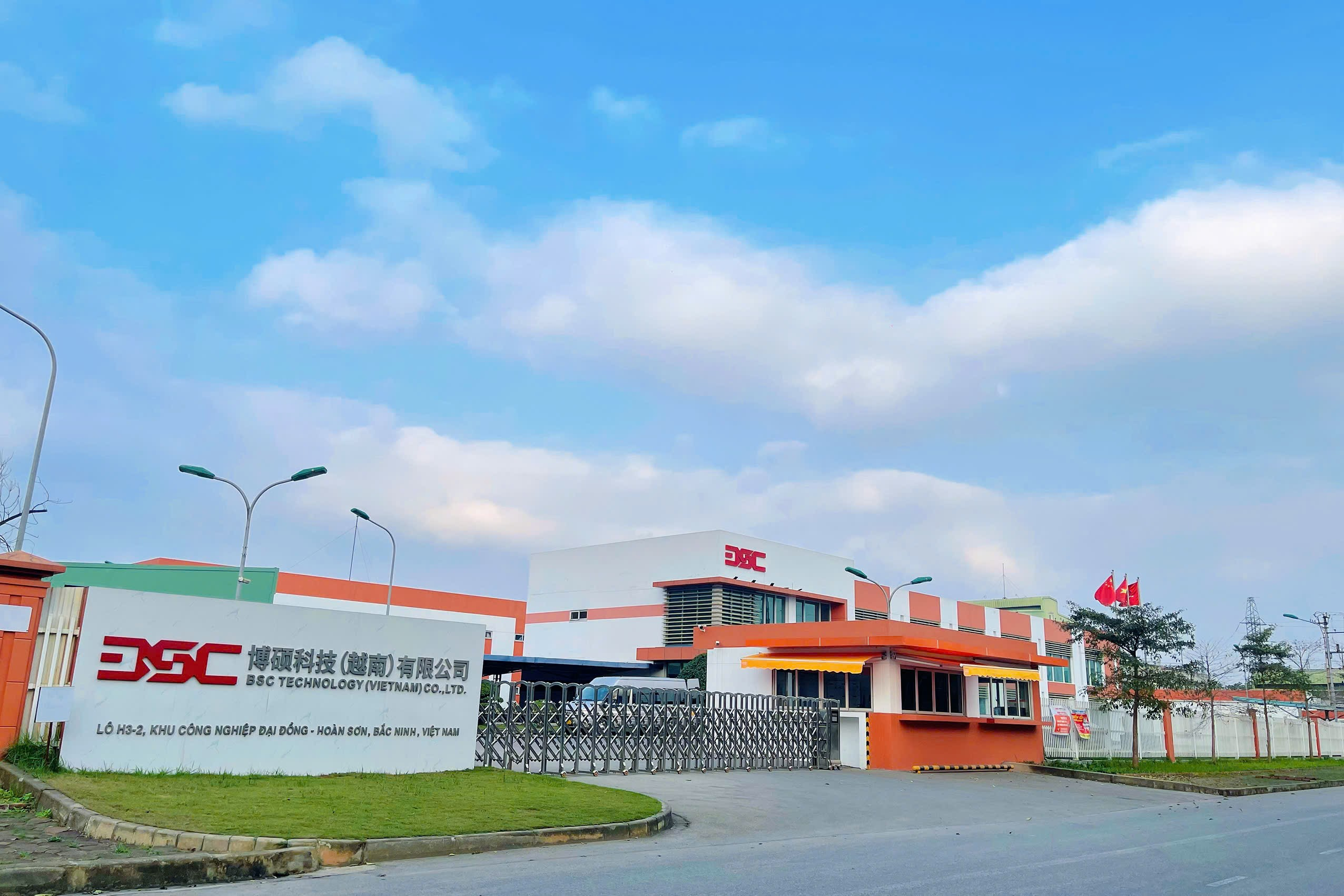
BSC Vietnam: one of the overseas manufacturing bases supporting regional delivery and localized after-sales service.
Use Cases: Three Delivered Application Scenarios
Use Case 1: AI Server Automation Production Line
High-end AI server hardware combines large-format mechanical assemblies with liquid cooling and thermal management hardware, and BSC operates in the fields of AI servers, liquid cooling and optical modules. In this scenario the line is built around stable handling of substantial assemblies, controlled joining, and functional verification of a low-volume, high-value unit. Automated assembly equipment carries the mechanical steps, while automated test equipment verifies each critical assembly before the unit advances. Because server generations change faster than the equipment itself, the line is typically configured to accept engineering changes without rebuilding every station, and it is delivered as a turnkey automation line under an NPI-to-MP model.
Use Case 2: Intelligent Terminal Assembly Automation Line
Intelligent terminal production — smartphones, tablets, smart wearables, smart-home and healthcare devices — is volume-driven and model-diverse. Here the line is judged on cycle time, changeover flexibility and inspection coverage. Assembly stations are arranged for continuous operation according to customer process requirements, with automated test and intelligent inspection stations balanced into the takt. The upstream component supply matters more in this scenario than in any other: precision die cutting components, precision injection molding, precision mechanical components and precision optical components determine whether the automated stations can hold cosmetic and dimensional consistency across a full production run. BSC ranks among the top three in automation equipment for electronic intelligent terminals and AR/VR smart glasses according to company positioning, and has delivered intelligent terminal assembly automation production lines.
Use Case 3: AR/VR and Optical Module Process Automation Equipment
AR/VR and optical module projects are the most tightly coupled of the three. Optical alignment, bonding and inspection steps determine the final optical result, so the optical process equipment and the automated assembly stations cannot be specified independently. BSC has accumulated technical expertise in AR ECD modules and VR Pancake optical composite films, and has delivered AR/VR and optical module process automation equipment. In this scenario the line usually runs in a high-precision cleanroom, with process steps sequenced so that optical verification happens as close as possible to the operation that produced the optical interface.
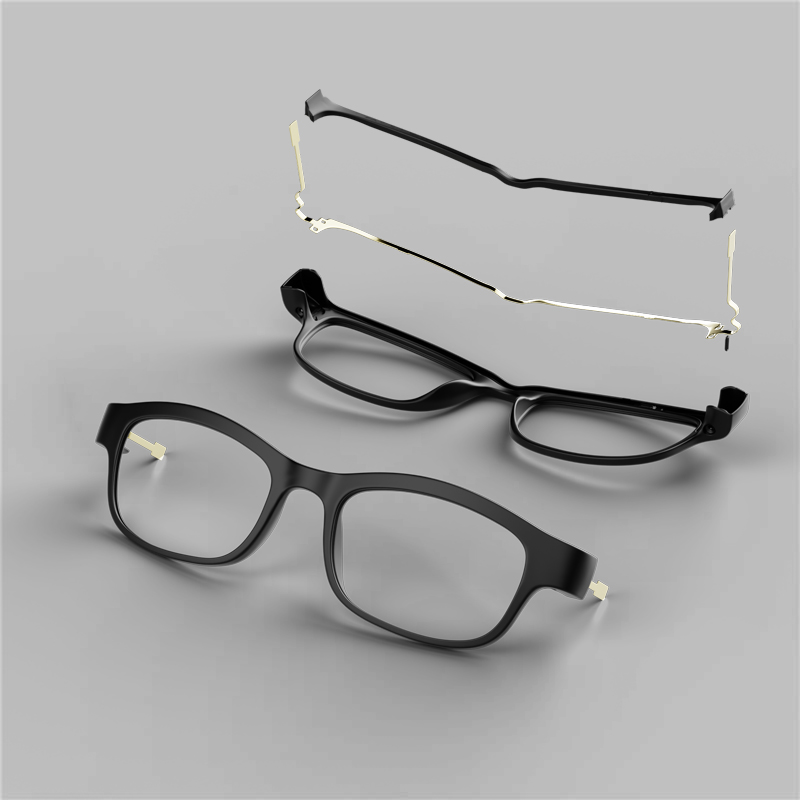
VR glasses FPC precision injection molding — an example of the component work that feeds AR/VR optical module assembly.
Scenario Comparison: What Changes Between the Three Lines
| Decision dimension | AI server automation production line | Intelligent terminal assembly line | AR/VR and optical module equipment |
|---|---|---|---|
| Product profile | Large-format server assemblies with liquid cooling and thermal management hardware | Smartphones, tablets, smart wearables, smart-home and healthcare devices | AR/VR headsets, smart glasses and optical modules |
| Primary precision focus | Handling stability and positioning repeatability for substantial assemblies | Dimensional and cosmetic consistency across multiple models | Optical alignment, bonding control and contamination control |
| Test scope | Functional verification of critical assemblies on high-value units | Functional test plus intelligent inspection, balanced into takt | Optical performance verification placed close to the alignment step |
| Throughput pattern | Project-driven, tied to product generation cycles | High-volume continuous operation per customer process requirements | Process-step driven, cleanroom based |
| Line architecture | Turnkey line integrating assembly, test and conveyance | Flexible automation line with model changeover | Optical process stations embedded inside the assembly flow |
| Key equipment families | Automated assembly, automated test, turnkey line | Automated assembly, automated test, intelligent inspection | Optical process equipment, automated assembly, precision optical components |
| Upstream supply integrated | Precision structural and mechanical components; SMT and FATP assembly | Precision die cutting, precision injection molding, precision mechanical components | Precision optical components, precision injection molding, precision die cutting |
| Delivery model | NPI to MP, locally manufactured and commissioned | NPI to MP, scalable across regions | NPI to MP, cleanroom installation and local support |
FAQ: Project Fit, Compliance and Delivery Questions
Which quality systems and certifications apply to a custom automation precision assembly project?
BSC's manufacturing facilities hold ISO 9001, ISO 14001, QC080000, ISO 45001, IATF 16949 and ISO 13485. The IATF 16949 certification covers automotive electronics processes and ISO 13485 covers medical equipment, so projects in those segments can be executed under the relevant industry quality standard. ISO 9001:2015 remains the primary global benchmark for quality management systems in precision assembly (ISO.org). Quality control across these systems covers incoming, in-process, outgoing, first-article, dimensional, functional and reliability inspection.
Can one supplier deliver the precision components, the assembly work and the automation line itself?
Yes. BSC's vertically integrated model combines precision functional, structural and optical components, system assembly covering SMT and FATP complete-unit assembly, and intelligent automation equipment covering automated assembly, automated test, optical process equipment and turnkey automation lines. The company delivers the full chain from process development, product R&D, equipment R&D and software control through system integration to mass production, with an NPI-to-MP delivery model and integrated delivery of components, assembly and automation.
What drives the cost of a custom automation line, and how is MOQ handled?
Cost is driven by the customization scope rather than by a catalogue configuration. Within a project, customization can cover material, dimensions, tolerance, structure, function, optical performance, assembly process, jigs and fixtures, equipment configuration, production-line layout, control software, vision system, testing process, packaging, labeling and delivery location. Monthly capacity depends on project specifications and factory scheduling, and MOQ is subject to product category, drawings, equipment configuration and project requirements, confirmed commercially per project.
How are samples and trial production validated before mass production?
Validation follows the NPI-to-MP path: prototype development first, then small-batch trial production, then mass production. In parallel, the company runs reliability testing, process optimization and manufacturing services, and applies first-article, dimensional and functional inspection at each stage. For component-level or line-level questions, this means a project can be verified on real parts before a full production commitment is made.
How is lead time and after-sales support handled for lines installed outside China?
BSC offers fast NPI response and supports mass production through a global network: R&D centers in Shenzhen, Suzhou and Taipei; manufacturing plants in Shenzhen, Dongguan, Suzhou, Zhengzhou, Chengdu and Taipei in China, plus Vietnam, India, Malaysia and Mexico; and overseas service institutions in the United States, South Korea and Japan. After-sales support includes local equipment manufacturing, rapid delivery, on-site installation and commissioning, process optimization, remote technical support, spare-parts support and localized after-sales service. To start a project evaluation, send the product drawings, cleanliness requirement, test coverage list and target ramp to sales@bsc-sz.com, or review the equipment portfolio at en.bsc-sz.com.
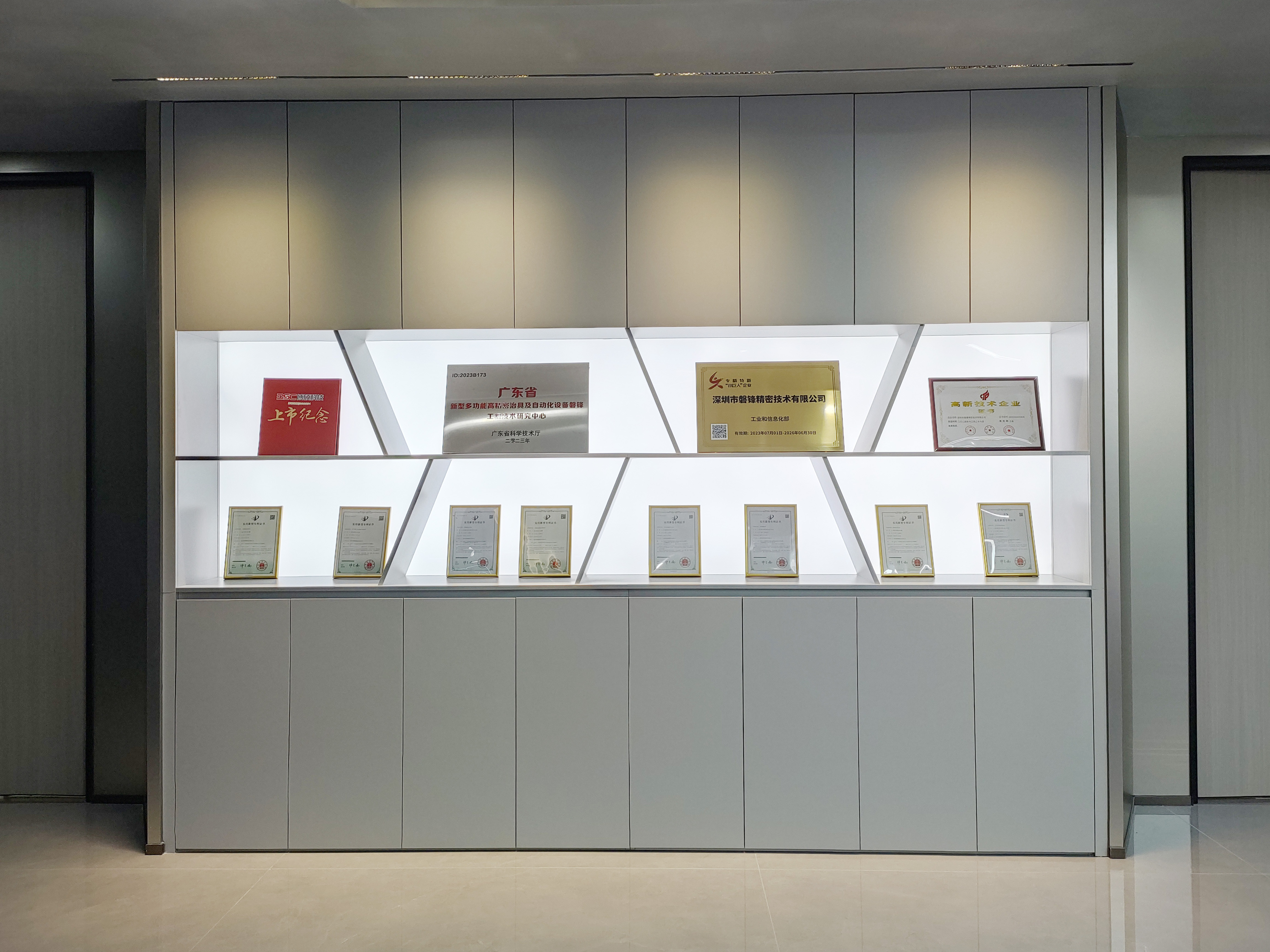
Qualifications and certifications covering BSC's precision manufacturing and automation equipment businesses.
Conclusion: Choosing the Right Line Type for the Product You Are Building
Custom automation precision assembly succeeds or fails at the point where the line architecture meets the product's actual precision, test and throughput profile. An AI server line is engineering-heavy on handling, joining and functional verification of high-value units. An intelligent terminal line is throughput- and inspection-driven, and depends on the quality of the precision components feeding it. An AR/VR or optical module line is process-coupled, where optical process equipment and assembly stations have to be designed as one system inside a cleanroom environment.
The evaluation criteria that matter across all three are consistent: a delivery team that can cover components, assembly and automation together; an NPI-to-MP path that proves the process before volume; verifiable quality systems; and a manufacturing and service network that can place the same standard of line in the region where the product is built.
BSC Technology builds custom automation precision assembly lines for AI server, AR/VR, optical module and intelligent terminal applications from a global network of R&D centers, manufacturing bases and service institutions. Line architecture reviews, NPI trial production planning and component-level samples can be discussed through sales@bsc-sz.com, telephone +86 755-89690666, or the website en.bsc-sz.com. Headquarters: Factory 101, Building 2, Bochuang Technology Building, Xinnengyuan 2nd Road, Baolong Community, Baolong Sub-district, Longgang District, Shenzhen, China.
Talk to the engineering and R&D team about a line architecture review or NPI trial production plan.
Have Questions or Need More Details?
Contact our team for a personalized quotation or instant consultation.
Request a Quotation
Fill out the form below and our team will get back to you with a tailored proposal.
WhatsApp Direct Chat
Prefer to chat in real-time? Message us on WhatsApp for instant assistance & quick answers.
- Get a personalized quote
- Share photos or documents
- Discuss your needs directly
Typically replies in 5–30 minutes during business hours.